
Spread Light 358 Print edition
Issue #34 August 1, 2026 · ה׳ אב תשפ״ו
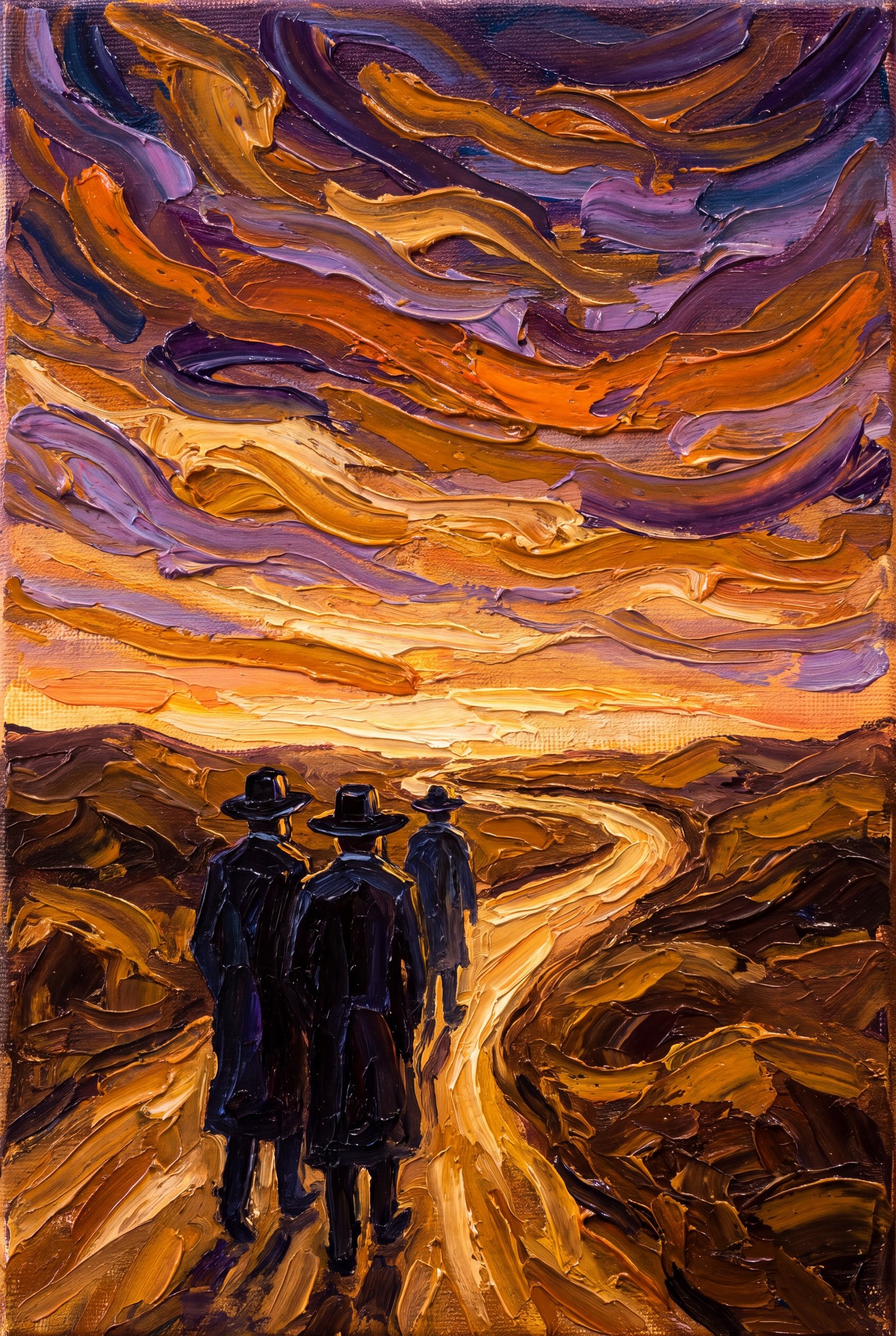
Cover artwork for Parshas Eikev

From the archive

Parshas Eikev

August 1, 2026 · ה׳ אב תשפ״ו · issue #34. Every piece below is printed exactly as it appears on paper — nothing trimmed.

Gematria on the Parshah: Reward for Mitzvot in this World?

In Parshat Eikev, we read the second paragraph of the Shema: Vihaya Im Shemoa. The Shema promises rain in its time, and abundance of crops, for heeding Hashem's mitzvot. But this raises important questions. The Sages say that mitzvot are not rewarded in this world. We see there are many righteous people who struggle financially. Additionally, the Tosher Rebbe raises the opposite question. The Kabbalists say Hashem fulfills all the mitzvot He commands us. He forbids a boss to delay payment to a day worker, so why doesn't Hashem pay us for mitzvot right away in this world?

Why We Are Rewarded in the Next World

The Chafetz Chaim provides a powerful parable for why we are rewarded in olam haba. Imagine a child who wants to buy candy from a candy store. He has no money of his own, but he finds his mother's diamond ring. With excitement he takes the ring to the store. The storekeeper refuses the money. The child cries, "But I have the payment!" The storekeeper explains, "When you get older you will understand."

We are children. We get too lost in the impermanence of the world. We get lost in money, in entertainment, in trivialities. We have to remember, as the Chafetz Chaim famously says, we are travelers in this world. Hashem will not exchange mitzvot that are eternal for physical pleasures, the same way the storekeeper will not exchange candy for a diamond. Yet this begs the question: why does the Shema promise physical blessings at all?

The answer lies in a distinction the Tosher Rebbe draws between the mitzvot in general and one mitzvah in particular.

We Are Rewarded for Emunah in this World

The Tosher Rebbe says there is one mitzvah we are rewarded for in this world: the mitzvah of emunah. He quotes Bava Metzia 110b, which says one who sends a shaliach to pay his workers doesn't need to pay him right away, since he is paying through a shaliach. Hashem gave the Torah through His shaliach Moshe Rabbeinu, therefore He is not bound by the prohibition of "lo taleen," do not wait until the next day to pay.

All this is with regard to the 611 mitzvot, gematria of Torah, for "Torah tziva lanu Moshe"; however, the first two mitzvot, Anochi and Lo Yichyeh Lecha, were said directly by Hashem to Am Yisrael. These are the mitzvot of emunah, and therefore for emunah, Hashem does not delay our payment; He pays us here and in the next world.

This is alluded to in gematria. The gematria of והיה אם שמע (And if you will hearken) is 477, the same as אמונה שלמה (complete faith). Complete faith is itself the key that unlocks abundance.

This is also the reason Hashem took Bnei Yisrael out of Mitzrayim, a land consistently watered by the Nile, and brought us to Eretz Yisrael, a land that requires rain. Hashem wants us always to look up to the heavens for our parnassah. The gematria of פרנסה (livelihood) is 395, the same as השמים (the Heavens), and the gematria of גשם (rain) is 343, the same as אלהינו מלך העולם (God the King of the World).

Lesson for Us

Emunah is something that we must constantly water to sustain. What can water our emunah? Rebbe Nachman says emunah is connected with tefillah. Tefillah is called a double edged sword, for it has two aspects. The first is gratitude; we don't open our eyes to the miracles around us. Hashem provides us such abundance, yet we are too focused on what comes next. We have to set time every day to say thank You. The second is praying to Hashem for help. When we are going through a challenge, let it be a doorway, a doorway to connect closer to Hashem, to ask daily for help in the situation.

Rain does not fall all at once. It comes consistently, in its season, sustaining the earth little by little. Emunah works the same way. It is not built in a single burst but watered daily, through tefillah from the heart, until we merit true emunah, and the greatest blessings.

For more check out the Gematria Torah channel on Youtube!

Remembering the Road Through the Wilderness

In this parsha, Moshe Rabbenu continues his narration and ethical rebuke of the people before he dies, and they prepare to enter Eretz Yisrael.

In chapter 8 we find a striking section which serves both as a narration, but also seemingly as a form of meditation or remembrance on how Hashem took us through the travails of the desert journey:

Perek 8: "All of the mitzvah which I command you this day you should be careful to do, in order that you shall live and multiply, and you will come and inherit the land which H" swore to your forefathers. And you shall remember all of the way which H" your G-d brings you, this 40 years in the wilderness, in order to afflict you, to test you, to know what is in your heart, would you guard His mitzvos or not? He afflicted you, He made you hunger, and he fed you the mann, which you hadn't known, nor had your forefathers known, in order to inform you that not by bread alone does man live, rather by what comes out of the mouth of H," that is what causes a man to live. Your garment did not wear out from upon you, your foot did not swell these forty years. And you should know with your heart for just as a man disciplines his son, H" your G-d disciplines you. And you shall keep the mitzvos of H" your G-d, to go in His ways and to fear Him. For H" your G-d brings you to the good land, the land flowing with streams of water, springs and depths going forth from valley and mountain…."

There are a number of other contemplative pieces throughout the book of Devarim, some of which are laden with commandments, like the Shma, the Vahavta and following parshas.

However, Rambam and others do not list this particular meditation as one of the 613 commandments.

The central theme here is that the suffering and redemption that we experience along the way is to teach us that G-d and his commandments are the true source of our salvation.

However, this parsha is unique in that gives a practical way to contemplate how we should see G-d's involvement with our lives. It is a direct meditation on how to handle extremely difficult moments.

When we are in a powerful test, we should reflect about all of the journeys we have experienced in the past. In each one, as agonizing as they were, G-d brought us through. We always had a place to sleep, bread, and garments to wear. He always brought us out of the darkest places, and into safety.

But deliverance wasn't the whole story. Rather the affliction occurred in order that we should understand that it is by God's will and His commandments that we survive and increase. That is redemption.

The parsha goes on to explain the reward for this journey: He ultimately brings us to the good land, with fruit and plenty. That is the reward for following His will, seeing Him and enduring the tests.

Pick Up Your Chips!

Picture Moses alone on Mount Sinai, chisel in hand. He's carving the Ten Commandments into stone tablets. Every strike sends chips flying into the dust, but these are no ordinary chips. Tradition tells us that the stone tablets were hewn from sapphire, the same brilliant stone found beneath the Divine Throne itself. Moses is told to chisel out these tablets "for yourself." Our sages interpret this to mean that whatever fell to the ground while Moses worked, he got to keep for himself. This is how Moses became wealthy. From those small shavings that fell from the tablets.

We build our spiritual wealth in the same way, one collected nugget at a time.

Some good deeds are treated like massive diamonds. We give them our full presence. Others get filed away as mere fragments, small enough to skip when life gets busy. This is probably the worst mistake we can make in our daily routines. It happens when we say prayers on autopilot instead of with actual intention, or when a businessman conveniently ignores what most would interpret as only a "minor, insignificant bending of the rules."

The story of Moses' wealth helps us understand that a piece broken off something holy is still holy! Every act you do draws from that same infinite source, making even the smallest splinter something worth holding onto. Think about a Torah scroll. Every letter carries the same sanctity as the entire scroll, which is why a single missing letter invalidates the whole thing.

So ask yourself right now. What have you been treating as a chip? What quiet, unglamorous act of devotion have you been sweeping off the table because it felt too small to matter? Well, stop sweeping. Pick that chip up and look at it. It came from the same block as the whole, which means it was never small to begin with.

The Danger Of Being Full!

Last week, we spoke about expectations and the idea that before Hashem we are always in deficit. Everything we have already received — every breath, every opportunity, every person we love — is more than we could ever repay.

Parashat Eikev takes that idea one step further.

There is another problem with receiving blessing: eventually, we get used to it.

The Torah describes Eretz Yisrael in terms of unusual, extraordinary abundance, and then tells us: וְאָכַלְתָּ וְשָׂבָעְתָּ וּבֵרַכְתָּ אֶת ה׳ אֱלֹקֶיךָ — "You will eat, you will be satisfied, and you will bless Hashem your God." (Devarim 8:10)

We usually understand this simply: Hashem gave me food, so I say thank you. Someone gives you something, you say thank you. At its most basic level, it is a lesson in manners.

But the Torah is teaching something much deeper. Immediately afterward it warns: הִשָּׁמֶר לְךָ פֶּן תִּשְׁכַּח אֶת ה׳ אֱלֹקֶיךָ — "Be careful lest you forget Hashem your God."

The Torah describes how it happens. You eat and become satisfied. You build homes. Your possessions and wealth increase. Eventually: וְרָם לְבָבֶךָ וְשָׁכַחְתָּ — "Your heart will become elevated, and you will forget."

Until a person can say: כֹּחִי וְעֹצֶם יָדִי עָשָׂה לִי אֶת הַחַיִל הַזֶּה — "My strength and the power of my hand made me this success."

The Torah then gives the antidote: וְזָכַרְתָּ אֶת ה׳ אֱלֹקֶיךָ כִּי הוּא הַנֹּתֵן לְךָ כֹּחַ לַעֲשׂוֹת חָיִל — "You shall remember Hashem your God, for it is He Who gives you the strength to achieve success."

The danger is forgetting. The avodah is remembering.

And perhaps that is the deeper purpose of Birkat Hamazon. It isn't simply about saying thank you. It is about not forgetting.

The danger is not hunger. The danger is being full.

When I am hungry, I know what I need. When the business is struggling, when someone I love is sick, when I need parnassah, a shidduch, a home or an answer — dependence on Hashem comes naturally.

We daven. We say Tehillim. We beg.

And then, sometimes, Hashem gives us what we asked for.

At first, it feels miraculous. Then it becomes normal.

Rabbi Elazar says in Niddah 31a: אֲפִילּוּ בַּעַל הַנֵּס אֵינוֹ מַכִּיר בְּנִסּוֹ — "Even the person experiencing the miracle does not recognize his miracle."

Sometimes the greatest miracles in our lives are invisible precisely because we are living inside them. We forget how many things surrounding us today were once things we desperately prayed for.

The Ben Ish Chai, quoting the Arizal, teaches that Birkat Hamazon should be recited with שִׂמְחָה יְתֵרָה — exceptional joy. He instructs us to bentch בְּשִׂמְחָה וּבְטוּב לֵב וּבְכַוָּנָה גְּדוֹלָה — "with joy, a good heart, and great concentration."

That simcha matters. When we recognize that what we have is shefa from Hashem, gratitude becomes more than obligation. We recognize that we are living inside His giving.

Perhaps that is why the Torah says: וְאָכַלְתָּ — וְשָׂבָעְתָּ — וּבֵרַכְתָּ. Eat. Become full. Then bless.

When I am hungry, I don't need much help remembering Hashem. It is when I am full that I need reminding.

Last week, Va'etchanan reminded us that we are not owed; we approach Hashem asking for a מַתְּנַת חִנָּם, a free gift. Eikev asks what happens after the gift arrives.

As we continue our journey toward Rosh Hashanah, ask yourself:

What is in my life today that I once begged Hashem for — but have since allowed to become ordinary?

The greatest danger of blessing is not losing it. It is receiving it, becoming full, and forgetting that it was ever a blessing at all.

This week's issue is sponsored by

Reflective questionHow can remembering past challenges strengthen my emunah today?