Spread Light 358 Print edition
Issue #35 August 8, 2026 · כ״ה אב תשפ״ו פרשת ראה
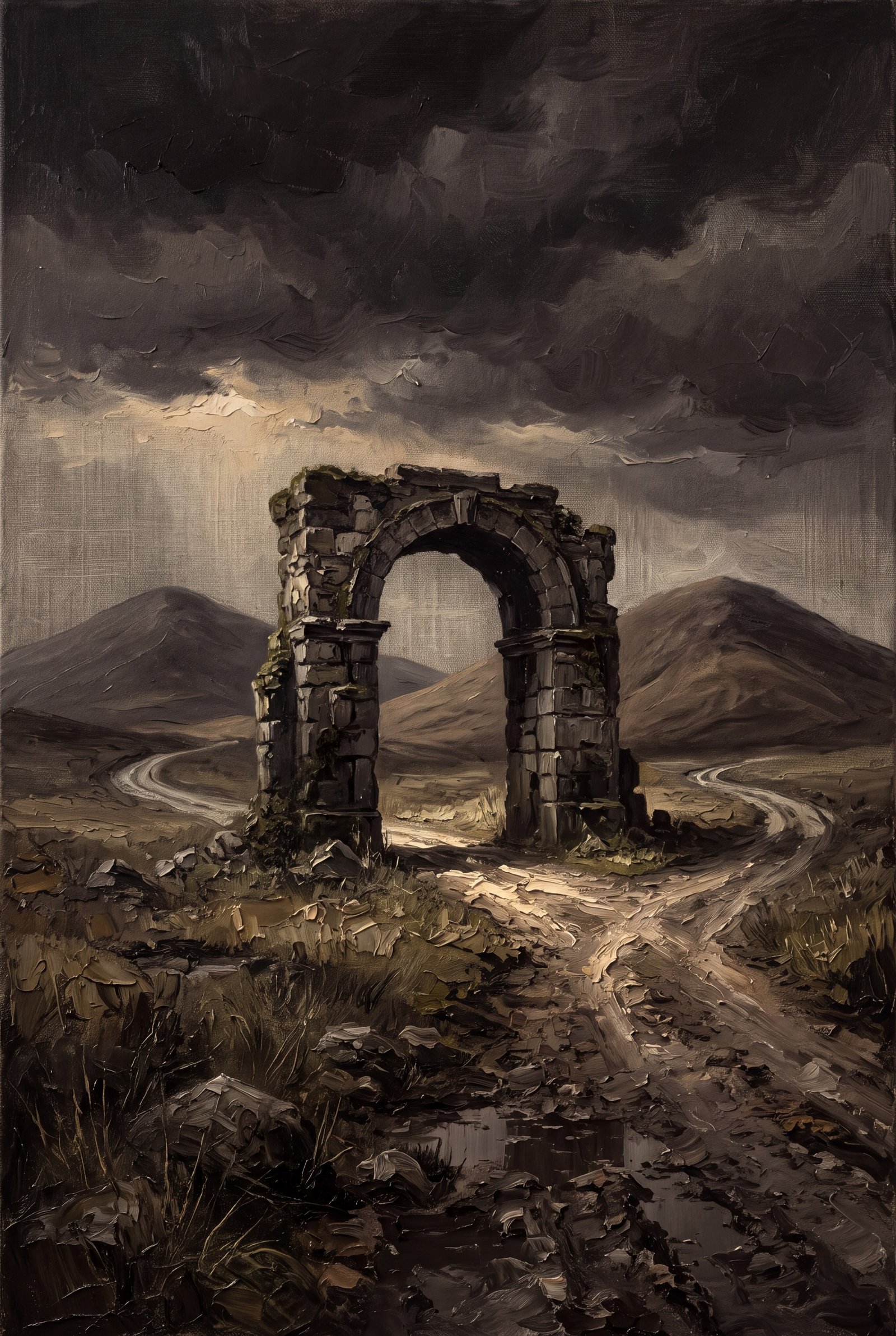
Cover artwork for Parshas Re'eh

From the archive

Parshas Re'eh

August 8, 2026 · כ״ה אב תשפ״ו · issue #35. Every piece below is printed exactly as it appears on paper — nothing trimmed.

Gematria on the Parshah: The Blessing Within the Curse

Parshat Re'eh begins with Hashem saying, "See, I give before you the blessing and the curse." The Baal Shem Tov asks: Why are the words blessing and curse placed right next to each other? The Torah doesn't usually juxtapose two opposite words like this, so there must be a deeper message here. He reveals something profound: The curse, the very hardship in our lives, can itself be a blessing. The Alter Rebbe takes this even further, teaching that our challenges are actually rooted in a higher level of holiness than our revealed blessings. How can the hardest moments of our lives be hidden blessings?

Every Struggle Is an Opportunity

The Baal Shem Tov teaches that every negative occurrence in life is really an opportunity in disguise. When we are tested, when we feel the sting of others' negativity, loss, or the weight of struggles in parnassah, Hashem is inviting us to rise. Whenever we struggle, when the yetzer hara rises up against us, if we respond with prayer, emunah, and working on our middot instead of with despair, our challenge becomes the springboard that lifts us higher than we ever could have gone without that problem.

As the Lubavitcher Rebbe beautifully illustrates: when an elastic band is pulled back, the moment it's released, it flies further than it ever could have gone without the resistance. Our struggles are that pull, propelling us toward something greater than we could have reached without them.

Yosef HaTzaddik: Strength Born From Resistance

Yosef HaTzaddik shows us exactly how this works. Why was Yosef given the title tzaddik, the righteous one? Because in his darkest moment of temptation, facing Potiphar's wife, he chose holiness. The reward for that single act of strength was immeasurable: the gematria of יוסף הצדיק (Yosef the Righteous) is 365, the exact same as all the negative mitzvot in the Torah. By overcoming just this one test, it was as if he fulfilled all the negative mitzvot. As well, the gematria of ברית (covenant) is 612, the same as כל מצות ה׳ (all of Hashem's mitzvot). As the Zohar says, one who guards the brit is considered to have fulfilled the entire Torah.

Because Yosef triumphed in that one hidden moment, the Zohar tells us he merited to rule over all of Mitzrayim, becoming the source of blessing not only for his own family, but for an entire nation.

Yosef's blessing didn't end there. Generations later, the Talmud tells us the sea split for Moshe Rabbeinu the moment it saw the coffin of Yosef. As we sing in Hallel, "Hayam ra'ah vayanos," the sea saw and fled, because it recognized that Yosef, too, had once fled from temptation. Yosef could never have imagined that his private battle for holiness would one day help part the sea itself, the miracle of miracles.

The Tosher Rebbe teaches that we must train our eyes to see every hardship the way Yosef did, as an opportunity waiting to be unlocked. The next time we face a challenge, let us remember: from this "curse" will we be able to access the greatest blessing. Let us turn to Hashem with the deepest, most heartfelt prayer, asking for the strength to transform our darkness into light. Because like Yosef, when we do this, we not only bring blessing into our own lives, we become channels bringing blessing to all of Am Yisrael.

This idea is hinted at in the gematria itself. אדם + יצר הרע (man and the evil inclination) equals 620, the very same as כרת (spiritual excision) and כתר (crown), the highest of all the sefirot. Here lies the secret: the yetzer hara is a door. It can lead us to the deepest darkness, or, if we have the courage and strength to overcome it, that same door can reveal the greatest light, straight from Hashem's crown. The very same number that can bring a person to his lowest point can lift him to his highest. The choice of which door we walk through is entirely in our hands.

Story of the Arizal: Why Our Struggle Matters More

I'll close with a story of the Arizal and Rav Chaim Vital. Rav Chaim Vital once asked his master how it could be that Mashiach will come in our generation, when the generations that came before us were so much greater. The Arizal answered that today the yetzer hara is far stronger than it has ever been, so when we overcome it even in the smallest way, it means infinitely more to Hashem and draws down blessings greater than any generation could before us.

If this was true in the 16th century in Tzfat, one of the holiest places in the world, how much more so is it today. Every time we conquer our yetzer hara, we bring the greatest blessing not only to ourselves, but to the entire world. May Hashem bless us with the strength to reveal the highest light from within our challenges.

For more, check out the Gematria Torah channel on YouTube!

You Become What You Learn to See

Parshas Re'eh begins with one simple word: "Re'eh". See.

Not "listen."

Not "understand."

Not "believe."

See.

Because the way you see the world determines the way you experience it.

Two people can walk through the exact same circumstance and leave with completely different lives.

One sees rejection. The other sees redirection.

One sees failure. The other sees refinement.

One sees punishment. The other sees an invitation to grow.

The circumstance is the same. The vision is different.

This is why the Torah doesn't begin by changing our circumstances. It begins by changing our eyes.

Many of us spend years asking Hashem to change our lives, while continuing to look at life through the same wounded lens.

If I believe I'm not enough, every piece of feedback becomes proof.

If I believe people always leave me, every disappointment reinforces the story.

If I believe Hashem is distant, every challenge feels like abandonment.

We don't just see reality. We see reality through the lens of our beliefs.

The Baal Shem Tov taught that what a person sees is often a mirror reflecting what still needs attention within themselves.

Sometimes Hashem isn't trying to change what's in front of us. He's trying to change the eyes with which we look at it.

Perhaps that is the deepest blessing of Parshas Re'eh.

Before asking Hashem to change your situation, ask Him to help you see it differently.

Because the greatest miracle is not always a new circumstance.

Sometimes the greatest miracle is receiving new eyes.

And when your vision changes, your life begins to change with it.

Spiritual Catch Up!

Pesach must fall in the spring. That creates a challenge because the Jewish calendar is based on the moon, not the sun. And the lunar year is roughly 11 days shorter than the solar year.

Unaddressed, that 11-day gap will, within a few years, drag Pesach out of spring and put the entire holiday calendar out of whack. We fix this by adding an extra month to the calendar every couple of years. This additional month reverses the drift. It temporarily overcompensates for the slow loss of days and leapfrogs the calendar right back into seasonal alignment.

This concept tells us something about how G-d counts time. If 11 vanished days can be completely recovered, and then some, with one extra month, the days we spent distracted, or coasting on autopilot, matter a lot less than we think. We can wipe out the gaps that we have created with our poor decisions.

G-d built the same comeback into you that He built into the sky. Whatever you have missed, this month or this decade, is available to you today. Go ahead and seize it!

The Choice That Honours the Gift

Over the past few weeks, we have been following a progression.

In Va'etchanan, Moshe Rabbeinu asks Hashem for matnat chinam — a free gift. Even after a lifetime of service, he does not approach Hashem as though anything is owed to him.

In Eikev, that humility becomes gratitude. The Torah tells us, "וְאָכַלְתָּ וְשָׂבָעְתָּ וּבֵרַכְתָּ אֶת ה׳ אֱלֹקֶיךָ — You will eat, you will be satisfied, and you will bless Hashem your God" (Devarim 8:10).

We are asked to stop in the middle of fullness and remember where it came from.

Then Re'eh begins: "רְאֵה אָנֹכִי נֹתֵן לִפְנֵיכֶם הַיּוֹם בְּרָכָה וּקְלָלָה — See, I place before you today blessing and curse" (Devarim 11:26).

The Bat Ayin, in his teaching on Parashat Re'eh beginning "או יאמר ראה אנכי נותן," draws attention to the words "אָנֹכִי נֹתֵן — I am giving." The word Anochi carries the closeness of Hashem's direct revelation at Sinai. The gift is not anonymous. It cannot be detached from the Giver without losing its meaning.

Imagine parents giving their child a significant amount of money to help purchase a home.

The child can use it as a down payment and build the future his parents hoped to help him create. Or he can spend it destructively — on drugs, gambling or something else that damages his life.

In both cases, the same money was given.

In the first, the gift becomes a blessing. It helps the child build a home and carries his parents' love, sacrifice and hope into his future.

In the second, the gift itself becomes the means of harm. The money intended to build his life becomes the instrument through which he tears it apart.

The curse is not only what the money purchases. The deeper curse is the disconnection from the giver — the attempt to keep the gift while rejecting the love and intention behind it.

Perhaps Re'eh is teaching that blessing and curse are not always two entirely different things. Sometimes the same gift can become either one.

Money can build a home or feed an addiction. Strength can protect or overpower. Influence can lift people or diminish them. Success can make us more generous, or persuade us that we no longer need anyone.

What changes is not necessarily what was given. What changes is how we choose to receive it.

Rabbeinu Bachya explains that service begins when the recipient recognizes the goodness of the Benefactor and seeks an appropriate response (Chovot HaLevavot, Sha'ar Avodat HaElokim, chapter 3). He later adds that every increase in goodness calls for an increased response in service (chapter 6).

Gratitude is therefore not completed by saying thank You. Gratitude shapes the choice that follows. It asks: What was this gift meant to help me become?

The Ramchal writes that everything in this world is a test — "poverty on one side and wealth on the other" (Mesillat Yesharim, chapter 1). We easily recognize the test of hardship. The test of blessing is quieter.

When we lack, we know that we need Hashem. When we are full, successful and secure, it becomes easier to imagine that everything is simply ours.

That is the warning of Eikev: "וְרָם לְבָבֶךָ וְשָׁכַחְתָּ אֶת ה׳ אֱלֹקֶיךָ — Your heart may become elevated, and you may forget Hashem your God" (Devarim 8:14).

Forgetting the Giver eventually means forgetting the purpose of the gift.

The Or HaChaim explains the words "אֶת הַבְּרָכָה אֲשֶׁר תִּשְׁמְעוּ — the blessing, that you will listen" to mean that listening to Hashem is itself the blessing (Or HaChaim on Devarim 11:27). Hashem does not only give us resources. He gives us Torah, which teaches us what those resources are for.

Perhaps that is the movement from Eikev into Re'eh.

Eikev teaches us to recognize that our lives are filled with gifts. Re'eh teaches us that gratitude for the Giver must shape what we choose to do with them.

A grateful person does not ask only, "What am I free to do with what I have?"

He asks, "What choice would honour what I have been given?"

But perhaps the deeper question is:

What is this gift asking me to become?

Has this blessing made me more generous, more patient, more responsible and more aware of Hashem? Has it helped me grow — or has it simply allowed me to remain exactly as I was, only with more?

Sometimes the curse is not losing the gift. Sometimes the curse is keeping the gift while refusing to grow through it.

This week's issue is sponsored by

Reflective questionWhat choice am I making today that brings me closer to Hashem?