Spread Light 358 Print edition
Issue #39 September 5, 2026 · כ״ג אלול תשפ״ו פרשת נצבים־וילך
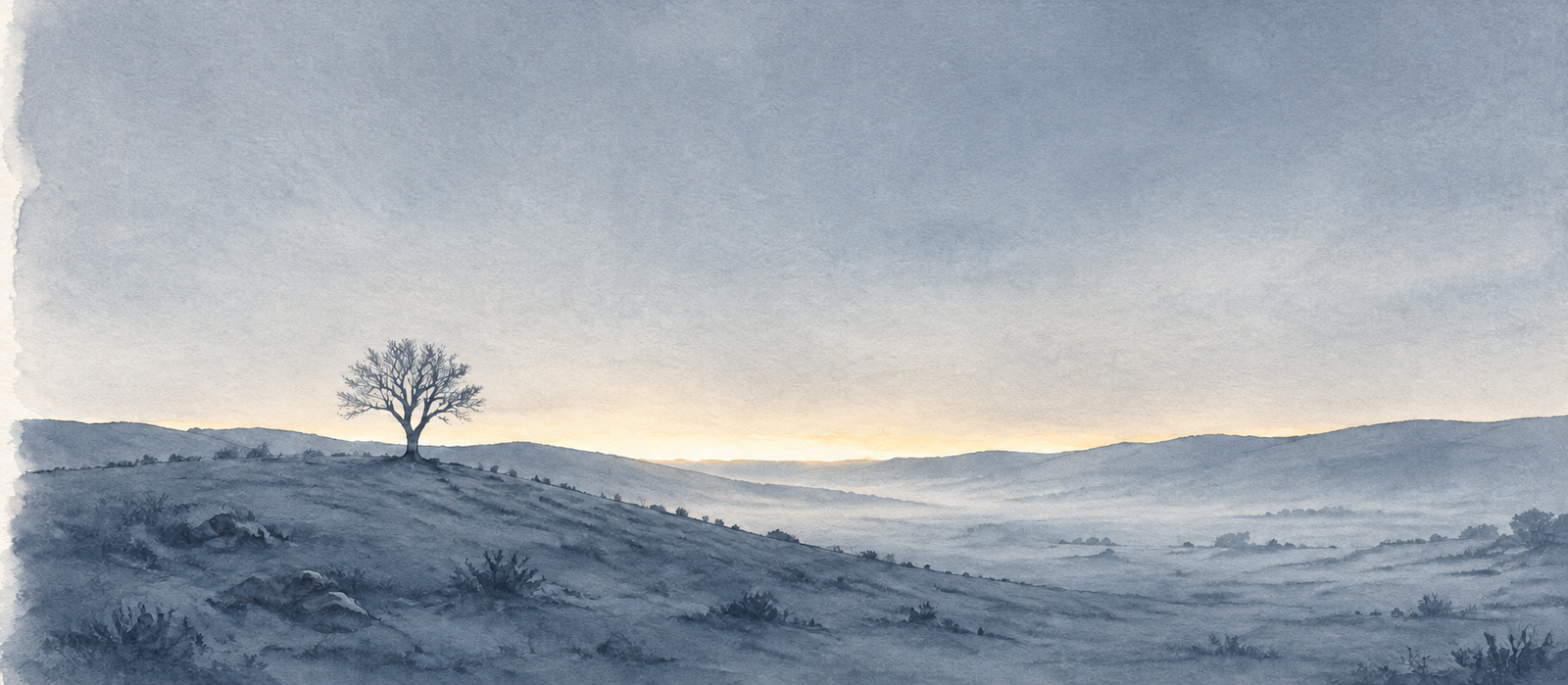
Cover artwork for Parshas Nitzavim-Vayeilech

From the archive

Parshas Nitzavim-Vayeilech

September 5, 2026 · כ״ג אלול תשפ״ו · issue #39. Every piece below is printed exactly as it appears on paper — nothing trimmed.

Gematria on the Parshah: Hearing the Cry of the Shofar

The pinnacle of Rosh Hashanah day is the mitzvah of shofar. The shofar is meant to awaken us to teshuvah, and renew our inspiration for the year. What should we have in mind while hearing the shofar? How can we take the message of the shofar with us throughout the year?

The Shofar of Chatzot

The Zohar teaches that the shofar isn't only sounded down below during Elul and Rosh Hashanah, it is sounded in heaven, every night at chatzot.

Gematria reveals this connection. The gematria of שופר is 586, the same as בחצות הלילה (at midnight).

The Talmud explains that every night at chatzot Hashem mourns over the Temple, and yearns for His children who are "far away from Him." The Talmud says Hashem roars nightly like a lion: "Woe to the Father who has sent His children away from His home!"

The cry of the shofar isn't only the cry of the neshamah for Hashem; it is Hashem's cry for the Jewish people to return.

To tap into the shofar throughout the year, we have to remember that Hashem is always crying out for every Jew to return, like a mother yearning for her lost children.

Moshe Rabbeinu's Cry

This is one of the major differences between a Tzaddik and an ordinary person. The Tzaddik hears this cry. He understands how precious every Jew is to Hashem, and how He yearns for them. He carries this thought in all his daily interactions.

The Tikunei HaZohar reveals this about Moshe Rabbeinu. The Torah says when Batya saved Moshe she was moved by his cry. But it wasn't an ordinary cry. She heard the cry of the Shechinah, Hashem's cry for the Jewish people. Moshe was born with this consciousness, and with effort we can also hear this cry.

Story of Baba Sali

Baba Sali was a Tzaddik who constantly heard this cry. Every night, he would stay up from midnight to dawn mourning over the Temple. He told his wife never to enter his secluded room. Once she mistakenly entered. She saw his shirt drenched, uncontrollable tears rolled down his face. Baba Sali said, "This is why I told you not to come in here. The reason I am crying is Hashem is showing me how much He loves the Jewish people, and how far away they are from Him."

The Cry of the Soul

Another gematria of שופר 586 is כתינוק (like a baby). When we hear the shofar's cry, we can remember that we can come to Hashem with the cry of our soul, no words necessary, and He will be ready to take us like a mother embracing her beloved child.

Reminder for Our Lives

Both Rosh Hashanah and Chagei Tishrei will pass. We will return to ordinary life. But when we interact with another Jew, if we remember Hashem's cry and deep yearning to be close to this child, then we have internalized the message of the shofar.

For more, check out the Gematria Torah channel on YouTube!

Hard Means Loved!

G-d had a way to make your life effortless. But He refused to give it to you.

Parshas Vayeilech takes us back to the time the Jews were poised to cross the Jordan river and conquer the Land of Israel. At that time, Moses was their leader. Had Moses crossed the Jordan to conquer the land, victory would have been swift and effortless. Fortified walls would have collapsed and fierce armies would have melted without a single battle. Not only would the military campaign under Moses have been smooth, but our lifelong work of refining the coarse world and lifting it toward heaven would have dissolved in the same painless way. If Moses had just stepped over that border, every obstacle we have faced throughout history would be totally nullified. Moses was that overwhelmingly holy and powerful.

But G-d said no.

Instead G-d turned to Joshua and said, be strong and courageous, for you, not Moses, will bring the Jewish people into the land I swore to them. The effortless option through Moses existed, but G-d deliberately chose the path that would demand strength and courage from that generation and every one thereafter.

Why? Because G-d wants to flood your life with infinite goodness and your soul is hardwired to be embarrassed by an unearned gift. It is the "bread of shame." So, in an act of restraint, G-d held His most beloved servant back at the border. By doing this He left the resistance in your life intact on purpose, so that when the goodness arrives, it arrives as yours.

I could clear this in a second, but I love you too much to steal your victory.

That changes everything about the challenges you face. The obstacle in front of you is G-d refusing to hand you a gift that would shrink you. He is telling you, I could clear this in a second, but I love you too much to steal your victory. A farmer who wants a field of wheat by tomorrow will find only bare dirt. Wheat needs a laboriously plowed field and months of sun and rain before it becomes bread, and there is no shortcut through the waiting. Every day that obstacle sits unmoved in front of you, something underneath the surface is ripening.

So find the one wall you have been waiting for someone else to knock down. Be strong and courageous, and conquer the land.

You Don't Need to Become Someone New

There's something about Rosh Hashanah that naturally makes us think about becoming different. A new year is coming, so we start thinking about new commitments, new goals, and all the things we want to change. This year I'm going to be more patient. I'm going to be more present with my family. I'm going to take my relationship with Hashem more seriously. I'm going to finally deal with that part of myself that I've been avoiding.

There's nothing wrong with wanting to change. But I wonder if sometimes we approach Rosh Hashanah believing that Hashem is waiting for some improved version of us to finally show up.

Parshas Nitzavim gives us a very different picture. Moshe tells the Jewish people, "Atem nitzavim hayom kulchem lifnei Hashem Elokeichem." You are all standing today before Hashem your God.

The word kulchem, all of you, feels especially powerful heading into Rosh Hashanah. We stand before Hashem with all of ourselves. We don't only bring the parts we're proud of. We bring the places where we grew this year and the places where we didn't. We bring our faith together with our doubts, our accomplishments together with our disappointments, and even the promises we made last Rosh Hashanah that we somehow find ourselves making again.

Maybe that itself is part of teshuvah. Before we can change anything, we have to be willing to honestly stand where we are.

So much of our lives are spent trying not to do that. We stay busy. We distract ourselves. We blame other people. We tell ourselves stories about why we reacted the way we did or why we couldn't change. Sometimes we even use spirituality to avoid looking at ourselves honestly. But there is something about Rosh Hashanah that asks us to stop running for a moment and simply stand before Hashem.

Not with shame. With truth.

Where did I show up this year? Where did I disappear? Where was I living from love and where was I living from fear? Where did my ego get in the way of a relationship that matters to me? Where did I close my heart because keeping it open felt too painful? Where did I know what was right but still choose what was comfortable?

And then Nitzavim gives us one of the most beautiful messages in the Torah. "Lo nifleis hi mimcha v'lo rechokah hi." This is not beyond you, and it is not far away. "Ki karov eilecha hadavar me'od." It is incredibly close to you.

You can only return to something that is already yours.

We sometimes make teshuvah feel like we have to climb a mountain and become someone completely different. But the word teshuvah itself means return. You can only return to something that is already yours.

There is a part of us beneath all the noise that still knows who we are. Beneath the defenses, the fear, the anger, the coping, the mistakes, and all the ways we learned to protect ourselves, there is still a neshama that wants closeness. It wants truth. It wants Hashem. That part of us didn't disappear because we had a difficult year.

Maybe that is also why Nitzavim is followed by Vayeilech. Nitzavim means standing, while Vayeilech means going or moving. First we stand, and then we move.

I think the order matters.

Before making ten new commitments for the coming year, maybe we need to stand still long enough to ask ourselves where we actually are. And then instead of trying to reinvent our entire lives, we can choose one place where we want to move.

Maybe it's your marriage. Maybe it's the relationship with one of your children. Maybe it's your relationship with Hashem. Maybe it's a conversation you've been avoiding or a part of yourself you know you need to finally face.

Rosh Hashanah doesn't have to be about becoming a new person overnight. It can be about becoming a little more honest about the person who is already here, and taking one real step toward the person we know we can be.

We stand before Hashem kulchem, with all of ourselves.

And then we begin to walk.

Why So Much Darkness?

The Talmud (Rosh Hashanah 10b) teaches that a number of momentous events happened on Rosh Hashanah. Yosef left prison on that day, as well as the holy mothers Sara, Rivka and Chana conceived after being barren for years. However we could ask — what is it specifically about Rosh Hashanah that these events happened?

We know that Rosh Hashanah is the day of the creation of man. Though the first day of creation was on the 25th of Elul, the pinnacle, i.e. the reason for creation, was the 6th day. This was the 1st of Tishrei, which is Rosh Hashanah. It is not only the day of creation, but it is also the yearly renewal of humankind and the world.

G-d created everything in order to have a relationship with us. G-d, so to speak, was all alone and wanted to give to someone else. But G-d is All, and His light was so awesome before the creation that there wasn't any room for anyone else. So He opened a deep void in the center of that light to have room to create.

G-d doesn't want us to be automatons or robots though. The deepest relationships are those which we choose, not in which we are forced. G-d wants us to choose Him. That's why He created that void, so that man would have the space to do so. However there is a "dark side" to that great emptiness in creation.

Rabbi Nachman teaches that this emptiness is what gives us the illusion of judgement, evil, distance, and despair. In order for us to choose good, we must have the possibility of bad. But know — no matter how real that darkness may seem, it is not the whole picture. This illusion is necessary only in order that man should choose between right and wrong, and be rewarded commensurately.

However you should know that Hashem guides the Jewish people with the original unified light before this darkness came about. This miraculous light was revealed in Nissan and the miracles of Pesach. Rosh Hashanah, however, is attuned to the "darker" light of creation, the judgmental energy of the empty space. This judgement is necessary as part of the renewal of the world. Just as a seed rots before a tree is born, so too the world must be reborn every year. G-d starts anew again at Rosh Hashanah, and evaluates everything according to see how it fits into the grand scheme of things.

Our job today is to recognize G-d as the supreme and only force in the universe. On Rosh Hashanah we stand before G-d and crown Him King. We do that by realizing that we are not in charge, and that G-d has His own plans that are far above what we can possibly understand. He can sometimes be distant and unreachable, like a King, and we stand in awe of His utter grandeur.

This judgmental energy of creation can sometimes cause us to feel unworthy and disconnected from G-d. We may get angry even, chas v'shalom. We just really don't understand why G-d would want things to be the way that they are. We sometimes struggle with bridging the chasm, which makes it seem like there is a lack of G-dliness in the world.

Rabbi Nachman explains that through faith, emunah, we can bridge this chasm. Indeed this ability to move forward with emunah despite the existential angst of the world was why the Avos were called "Ivri," the ones who cross over (Likutey Moharan 64).

There is no void. It really is all light, even when we don't see it.

The tzaddik is the one who can bridge that void and bring Hashem's light into every dark place. He crosses over into the nothingness and declares that Hashem is really there after all. There is no void. It really is all light, even when we don't see it. It is just necessary sometimes for Him to hide Himself, to step back, kivyachol, so we can learn to walk, to act independently, to become ourselves.

This understanding can help us explain why these famous events occurred on Rosh Hashanah. It is the day of the judgements of the original creation, but also when we get total renewal as we step forward. Yosef the tzaddik, when he learned to rely fully on G-d, came out of the dark space of prison. As he emanated this light, he illuminated every dark space, emerging anew from the prison of despair.

And just as G-d had to make an empty space within His light, so to speak, in order to give room for another, so too a woman makes a space within herself to allow a child to grow. When the holy Matriarchs reached their potential, so too their wombs were opened for new life.

Rabbi Nachman teaches the way to crown G-d King on Rosh Hashanah is to judge Him favorably. We don't always understand why G-d does the things He does, but we must understand that His wisdom infinitely exceeds ours. He has His ways which penetrate the deepest of darkness. We should have faith in G-d that He will ultimately see everything through for the deepest of purposes.

The Darkness Is the Beginning

Nitzavim — the seventh step toward Rosh Hashanah

For six weeks, the Torah has been preparing us for Rosh Hashanah.

Va'etchanan taught us to recognize the gift. Eikev taught us gratitude rather than entitlement. Re'eh demanded that gratitude become choice. Shoftim taught that our choices require structure. Ki Seitzei warned that Amalek waits בדרך, along the way, to cool our enthusiasm. Ki Savo taught us to recognize the Source even while the blessing is still unfolding.

We have recognized. We have chosen. We have built. We have fought not to become cold. We have learned to say thank You.

Now comes Nitzavim.

אַתֶּם נִצָּבִים הַיּוֹם כֻּלְּכֶם לִפְנֵי ה׳ אֱלֹקֵיכֶם

"You are standing today, all of you, before Hashem your God" (Devarim 29:9).

After six weeks of trying to come closer, we finally are about to stand before Him.

And perhaps that is when we become frightened.

Because when we stop moving and stand honestly before Hashem, we become aware of the darkness.

Not only the things we did wrong.

Something deeper.

The feeling of separation itself.

I am here. Hashem is there.

I have wandered too far. I have covered myself with too much. Perhaps once I was close, but now I am distant.

The Ramchal describes our physical existence as חומר עב וחשוך — coarse and dark matter. Yet within that darkness Hashem places הנשמה הטהורה, החצובה מתחת כסא הכבוד — the pure neshamah, hewn from beneath the Throne of Glory — with the purpose לטהרו ולקדשו, to purify and sanctify it (Da'at Tevunot).

We live inside concealment for so long that we can begin to mistake it for reality.

And then the Torah introduces teshuvah.

וְשַׁבְתָּ עַד ה׳ אֱלֹקֶיךָ

"You will return to Hashem your God" (Devarim 30:2).

The Ramban understands the Torah's later words, כִּי הַמִּצְוָה הַזֹּאת, as referring to teshuvah.

And Hashem tells us:

לֹא נִפְלֵאת הִוא מִמְּךָ וְלֹא רְחֹקָה הִוא

"It is not beyond you, nor is it distant."

כִּי קָרוֹב אֵלֶיךָ הַדָּבָר מְאֹד

"The matter is very close to you" (30:11-14).

We feel far.

Hashem says: close.

Rabbeinu Yonah begins Shaarei Teshuvah by describing teshuvah itself as מן הטובות אשר היטיב השם יתברך עם ברואיו — "among the kindnesses with which Hashem has been good to His creations." Even after repeated failure, Hashem לא סגר בעדם דלתי תשובה — "did not close the gates of teshuvah before them" (Shaarei Teshuvah 1:1).

Perhaps the kindness is deeper than simply being given another chance.

Teshuvah reveals that the distance was never the whole truth.

The connection was concealed, not destroyed.

The Zohar takes us deeper still.

Teshuvah is not merely regret for what we have done. It is reconnection. What appears separated returns toward its Source.

Suddenly, כי קרוב אליך הדבר מאד means something entirely different.

We thought teshuvah meant travelling an enormous distance back to Hashem.

But perhaps the first discovery of teshuvah is that our perception of that distance was itself part of the darkness.

And then the Zohar gives us the principle that changes the entire story:

לית נהורא אלא ההוא דנפיק מגו חשוכא

"There is no light except that which emerges from darkness" (Zohar, Tetzaveh).

The darkness is not the end of the story.

It is the beginning.

Because the moment I recognize the darkness, something has already changed.

I am searching for light.

The pain of feeling distant from Hashem reveals that I still long for closeness.

The awareness of separation awakens the desire for connection.

And the darkness itself becomes the beginning of teshuvah.

Perhaps that is what these six weeks were preparing us for.

Recognize the gift.

Become grateful.

Choose.

Build.

Protect the warmth.

Recognize the Source.

And then stand before Hashem and finally recognize what separates you from Him.

That recognition is not the failure of the journey.

It is what the journey was preparing us to see.

אַתֶּם נִצָּבִים הַיּוֹם — you are standing today.

Now we see the darkness.

Now we feel the distance.

And now we can discover that beneath the concealment, the connection was there all along.

The darkness was never the end of the story. It was the beginning.

Rosh Hashanah does not arrive because we have finished the journey.

It arrives because we are finally ready to begin.

Teshuvah is not travelling back to a God who disappeared.

It is removing the concealment that made us believe He was far away.

The darkness was never the end of the story.

It was the beginning.

So as we finally stand before Hashem on Rosh Hashanah, perhaps the question is not: "How far have I fallen?"

Perhaps the question is: what if the distance I feel from Hashem is the very thing preventing me from seeing how close He really is?

The Bris We Pass Down

In Parshas Nitzavim, we encounter the following verse:

"And Hashem your G-d will circumcise your heart and the heart of your offspring, to love Hashem your G-d with all your heart and with all your soul, in order that you may live" (Devarim 30:6).

The Torah describes the future spiritual transformation of the Jewish people using the language of circumcision. The metaphorical Bris parallels the physical one. A father is commanded to circumcise his son (Rambam, Hilchos Milah 1:1), giving his child the physical Bris that connects our people to Hashem throughout the generations. But this verse introduces another kind of Bris: a circumcision of the heart. How can a father give his child this spiritual Bris?

The Sfas Emes explains that one who returns to Hashem through Teshuva merits that his children who come after him will also have the foreskin of their hearts removed. He notes that the words אֶת לְבָבְךָ וְאֶת לְבַב form the acronym אֱלוּל, because it was during this time that the Jewish people did Teshuva when Moshe received the second Tablets. Therefore, these days are days of Divine favour for us as well, as the descendants of those who did Teshuva (Sfas Emes, Devarim, Nitzavim, 5635).

The Sfas Emes teaches that the circumcision of the heart can be transmitted from parent to child through Teshuva. A parent who genuinely returns to Hashem does more than change himself; he opens a path for his children as well. Just as a father gives his son a physical Bris, his own spiritual work can help open his children's hearts to Hashem.

This finds its root in Hashem's own words about Avraham Avinu:

"For I have known him, so that he will command his children and his household after him, and they will keep the way of Hashem" (Bereishis 18:19).

Hashem chose Avraham because he would transmit His ways to his children. Avraham's greatness was not only in his own relationship with Hashem, but in making that relationship part of the life of the next generation.

We cannot determine the spiritual choices our children will ultimately make, but we can determine what we place within their inheritance.

This is the deeper meaning of the Bris we pass down. We cannot determine the spiritual choices our children will ultimately make, but we can determine what we place within their inheritance. When our children see us return to Hashem, take Teshuva seriously, and strive to deepen our own relationship with Him, they receive more than a lesson. They receive a path.

May we merit to give our children both the physical and spiritual inheritance that is ours to transmit, and may Hashem fulfill His promise to circumcise our hearts and the hearts of our children, so that we may love Him fully and truly live.

This week's issue is sponsored by

Reflective questionWhat if the distance I feel from Hashem is the very thing preventing me from seeing how close He really is?