
Gematria on the Parshah: The Blessing We Already Have
 ·
Parshas Ki Savo is the parsha of blessings and curses. It opens with the mitzvah of Bikkurim, bringing the first fruits to the Beit HaMikdash. Bikur is the same letters as baruch, pointing to the mitzvah's essential theme of gratitude. But why does the Torah specifically ask us to bring fruit to the Temple? What can Bikkurim teach us about recognizing the blessings in our own lives?
The Significance of Fruit
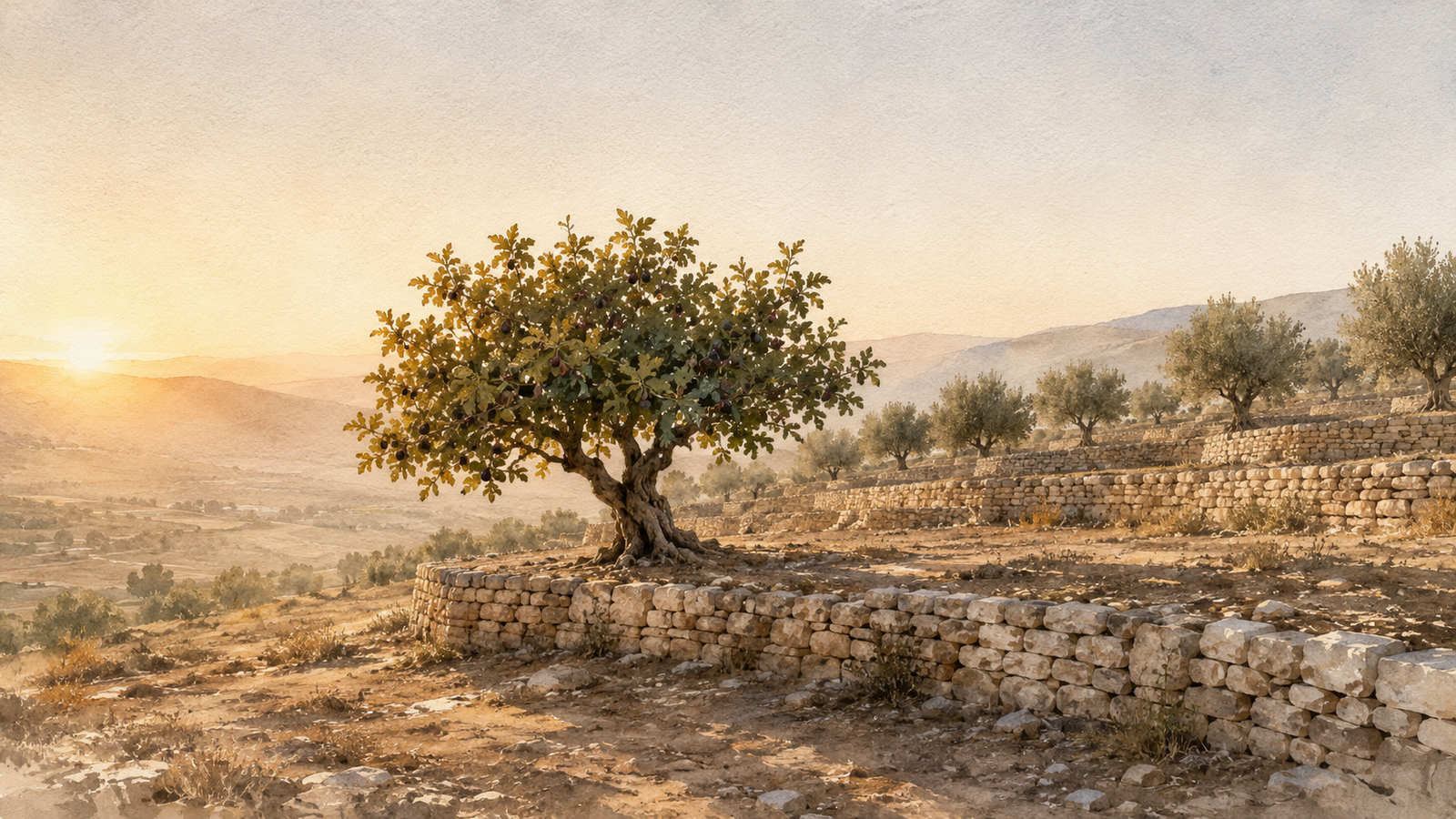
We know that fruit carries a deep spiritual significance. Through the fruit of the Tree of Knowledge, man first disconnected from Hashem. Through the fruit of Bikkurim, we repair that relationship.
The Shlah HaKodesh shares a shocking insight. The Torah tells us that both the Tree of Life and the Tree of Knowledge of Good & Evil were in the center of the Garden of Eden. According to the Shlah they were actually the same tree. What determined whether man experienced it as the Tree of Life or the Tree of Knowledge was his intention and consciousness.
When we disconnect from Hashem, we live with the consciousness of the Tree of Knowledge of Good and Evil. We constantly divide life into good and bad, success and failure, blessing and difficulty. But our perspective is often limited.
We can spend years waiting for the next stage of life to bring us happiness, only to look back and realize that the moment we were waiting to escape was itself a blessing.
Bikkurim brings us to the consciousness of the Tree of Life. The Tree of Life is not about waiting for something good to happen. It is about opening our eyes and realizing that what we have right now is the blessing.
The gematria of בכורים (first fruits) is 278, the same as אדם + עץ החיים (Adam + the Tree of Life).
This is the consciousness of Bikkurim. We do not need to bring physical fruit to the Beit HaMikdash to live with this consciousness. We simply need to remember that every moment is the true gift.
Our time with our family, our friends, and our ability to perform mitzvot are all limited. When we remember how every experience is limited, we can be present to life's blessings.
King David's 100 Blessings
This idea is reflected in the story of King David. During his time, Am Yisrael experienced a plague. He realized that if Am Yisrael would recite one hundred blessings each day, it would have the power to nullify the decree. King David established the practice of saying one hundred blessings each day, constantly recognizing the goodness of Hashem.
However, the deeper lesson is not simply to count our blessings. It is to develop a consciousness of blessing.
When we praise Hashem throughout the day, as King David taught us, we return to the consciousness of Gan Eden. We begin to open our eyes to the blessings Hashem is bestowing upon us, instead of the ones we are searching for.
The gematria of הודו לה׳ כי טוב (Praise Hashem, for He is good) is 124, the same as עדן (Eden).
Perhaps Eden is not only a place we are striving to get to in the distant future, but it's a consciousness we can tap into each day.
For more, check out the Gematria Torah channel on YouTube!