
Spread Light 358 Print edition
Issue #44 October 17, 2026 · ו׳ חשון תשפ״ז פרשת נח
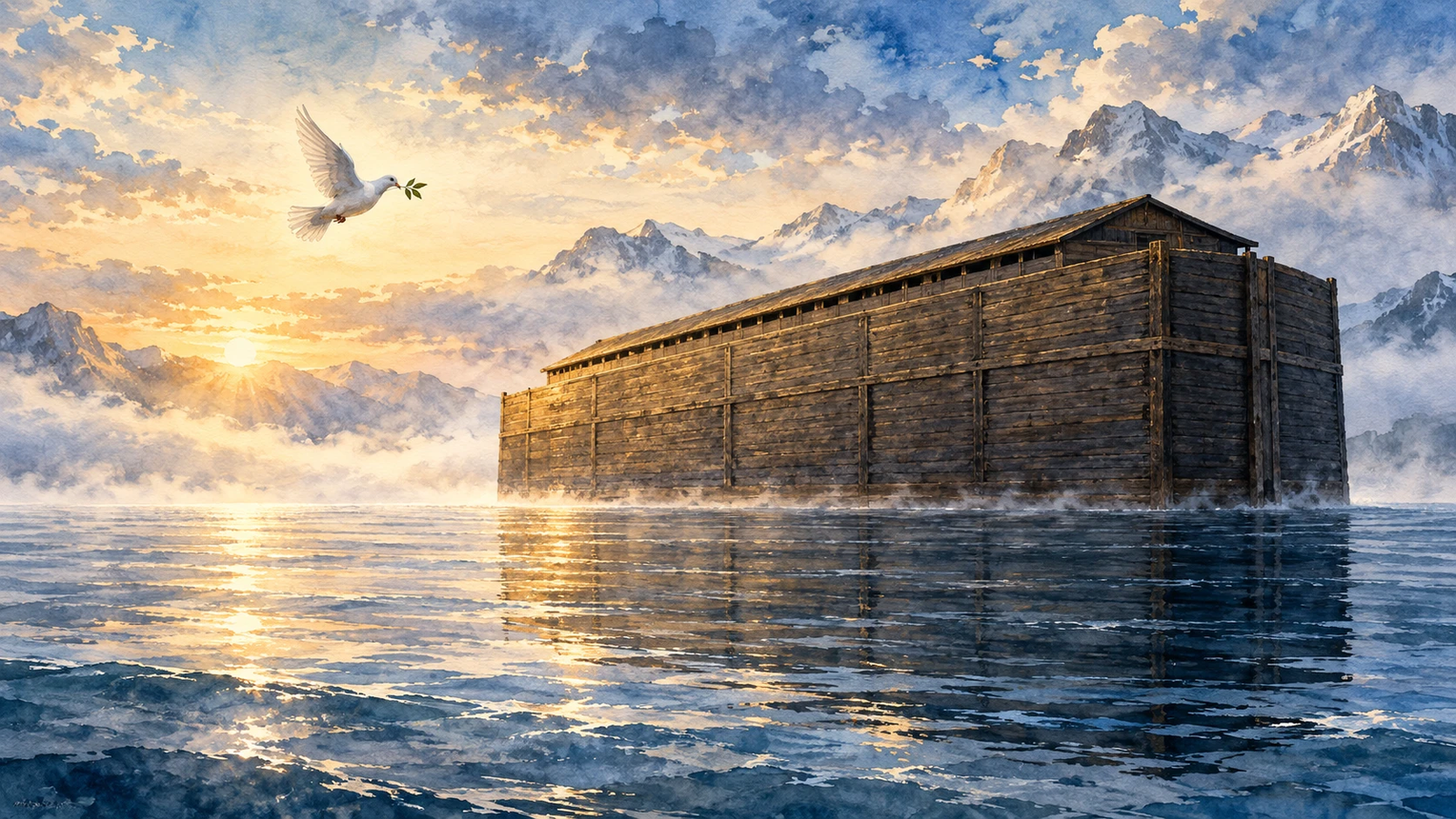
Cover artwork for Parshas Noach

This week

Parshas Noach

October 17, 2026 · ו׳ חשון תשפ״ז · issue #44. Every piece below is printed exactly as it appears on paper — nothing trimmed.

Gematria on the Parshah: Noach's Mission to Rectify the World

In Parshat Noach, we encounter a troubling episode in the life of the father of humanity. After surviving the devastating flood, Noach plants a vineyard, drinks its wine, and becomes intoxicated in his tent. His sons must cover him, and the episode ends with a curse upon his grandson Canaan. Why did Noach turn to wine after experiencing such a traumatic event? Was he overcome by depression, or was there a deeper spiritual purpose behind his drinking?

Noach's Attempt at Rectification

The Tikunei HaZohar reveals a remarkable dimension to this episode. Noach was attempting to accomplish a profound spiritual rectification. Sanhedrin 70a records the opinion of Rebbe Meir that the Tree of Knowledge was a grapevine. Gematria supports this connection: יין (wine), 70, equals אדם וחוה (Adam and Eve). The Tikunei HaZohar connects Noach's drinking to his desire to rectify the sin of Adam and Chava. By drinking the wine, Noach sought to engage with the very source of their sin, hoping to understand its spiritual damage and discover how to repair it, so that humanity would not repeat the sins that had brought about the flood.

A further gematria hints at the scope of Noach's mission. When Noach plants the vineyard, the Torah calls him נח איש האדמה (Noach, the man of the earth), which equals משיח בן דוד (Mashiach ben David), 424. Like Mashiach, who will ultimately rectify the world, Noach sought to repair the damage caused by Adam and Chava's sin. Another connection is that Adam is contained in the word Adama.

Tragically, Noach's attempt failed. The tzaddik who found favor in Hashem's eyes, through whom humanity would begin again, fell into disgrace. What went wrong?

The Missing Ingredient: Unity

Perhaps the answer lies in the very sin Noach sought to repair: the breakdown of unity between Adam and Chava.

The Midrash explains that Adam established an additional safeguard around Hashem's commandment by instructing Chava not to touch the tree, but failed to clarify that this was his own added restriction. The Serpent exploited this confusion, pushing Chava against the tree and arguing that just as she had touched it without dying, she could eat from it as well.

Perhaps Noach's mistake was similar. He sought to rectify the Tree of Knowledge, but attempted to accomplish this enormous task alone. The Torah records no conversation between Noach and his sons. Could Shem and Yafet have helped him elevate the spiritual potential of the wine? Perhaps. But Noach's mission remained his own, and he fell.

Another striking gematria reinforces this idea. נח בן למך (Noach son of Lemech), 200, equals יין נסך (wine associated with idolatry). The Mitteler Rebbe teaches that depression resembles idolatry. Drinking alone can reflect this inner darkness: a person turns inward rather than reaching out to others. Perhaps Noach's despair following the flood prevented him from connecting with his family and achieving the very rectification he sought.

There is a beautiful hint in the words יין (wine) and לחיים (to life). Both contain two yuds, which can remind us of two Yidden. Sharing a לחיים transforms drinking into an opportunity for blessing and connection. What can become an expression of darkness in isolation can become an expression of life when shared with another Jew. The rectification of the Tree of Knowledge requires the unity that was missing between Adam and Chava.

Story: Unity to Bring the Geulah

Rabbi Shalom Sharabi, the Rashash, sought to bring Mashiach in his time and understood that unity was key to redemption. He established a special fellowship of twelve select students known as Ahavat Shalom. They pledged to regard themselves as one soul, treating one another's physical and spiritual struggles as their own.

What can become an expression of darkness in isolation can become an expression of life when shared with another Jew.

They hoped that the unity they cultivated among themselves would spread throughout Klal Yisrael and help bring the Geulah. The Rashash understood that unity was a key ingredient to merit the final redemption.

The Lesson for Us

Like Noach, we want to rectify the world and prepare it for Mashiach. We want to overcome the yetzer hara and bring Hashem's light into a world that desperately needs it. But we cannot accomplish this work alone.

When we struggle, we must not retreat into ourselves. We should seek guidance from a Rav or friend, ask for help, strengthen another Jew, and allow others to strengthen us.

Sometimes, connecting with another Jew is all we need to remove the darkness and let in the light.

For more, check out the Gematria Torah channel on YouTube!

Two Thoughts on Parshas Noach

The words for bow and rainbow are both keshet. Onkelos says tefillah is like a bow that has overarching, outstretched power. This is our ultimate weapon, as expressed in Parshas Vayechi, which says go to Emori, one of our enemies, with a sword and bekashti, which Onkelos renders as ubevaoti, like the word bow.

Midrash Rabbah Bereishit says that the animals were mixing with other species, so this improper breeding had to come to an end, as if one commits murder (as mentioned later on elsewhere in Ohr HaChaim). It begs the question of how ethical animal breeding really is, and its unnatural state. As a result, the world had to come back to its natural order, so to speak.

Life After the Flood!

Noah's Flood washed away the world, but it left behind the ability to start over.

Before the waters came, reality was arranged like a long row of falling dominoes. Each choice anyone made bumped directly into the next one. The inevitable sequence could not be stopped. A single act of cruelty set off a cascade of evil that went on forever.

Then came the forty days of rain. A mikvah, the pool we immerse in for spiritual renewal, also holds forty measures of water. The Flood was the whole world going into the mikvah. When Noah stepped out of the ark, he found a brand-new world washed clean of its past. G-d had added something meaningful. From that day on, any human being could turn around and begin again. It is called teshuvah.

Plenty of us assume our upbringing wrote an indelible script, or a mistake we made at twenty-five set the rest of the dominoes falling. That thinking belongs to a world that ended over four thousand years ago. You live in a post-Flood world. You have the power to break the sequence. G-d remade the entire world to put that power in your hands.

If your life feels like a storm right now, look at what the waters do in this week's parsha. As they rose, they lifted the ark higher above the earth. The same rain that swept the old world away carried Noah over it. Maybe the turbulence you're in has been lifting you too, and you haven't looked down yet.

You live in a post-Flood world. You have the power to break the sequence.

When the waters began to recede, Noah sent a dove out the window. The first time, it came back empty. On its second flight it returned with a freshly plucked olive leaf in its beak, proof that life was growing again.

Open your window today and send out one dove. Maybe it's the apology you've been rehearsing for a year. Maybe it's the first page of the book that lives in your head. If it comes back empty, send it again. G-d is waiting out there with open arms, and the ground is drier than you think.

The Waters of Noach

אֵלֶּה תּוֹלְדֹת נֹחַ

"These are the generations of Noach, Noach was a perfect tzadik in his generation, Noach walked with G-d."

Despite the Torah's appellation, the Sages disagree about how great he really was.

Rashi brings the Chazal that says compared to his wicked generation, the fact that he was a tzadik was an incredible feat. And how much better would he be in a greater generation!

But he also brings the midrashim that Noach was only good compared to his lowly generation. In Avraham's generation he would have been nothing! And further he brings the midrash which asks: What's the difference between what it says about Noach, את האלקים התהלך נח, "with G-d walked Noach," and by Avraham, התהלך לפני, "walk before Me"? Noach didn't have the holy initiative of Avraham. Rather, he needed Hashem to support him in everything. This was through the gifts of prophecy and other rewards. Avraham, on the other hand, reached out to Hashem on his own accord. Rashi further says Noach is of small faith because he waited until the last minute to get on the ark.

Rashi seems to focus on the negative approach when there is also praise for Noach. This must be due to his fate at the end of the parsha. He starts as a righteous man, and ends up as a mere man of the earth. Even though he acts well when he gets off the ark and builds an altar to Hashem, nevertheless immediately after he plants a vineyard, gets drunk and is violated by his son. When it says that Noach was a tzadik, it says היה, he was a tzadik, but did not remain so.

How does Noach fall so hard? The Kedushas Levi spends a lot of time explaining the juxtaposition between these two parshas which talk about Noach and Avraham. Noach is a tzadik who serves G-d with great excitement, but keeps it for himself. However, there is a higher tzadik who brings the wicked to repentance, and that is Avraham.

He continues that Noach was actually punished for this lack of connecting to people, and as a tikun his soul had to come back as Moshe Rabbenu, who included himself with the people by rebuking them. The holy sefarim say this is why the haftarah calls the flood מי נח, "the waters of Noach," because he didn't do anything to help.

Avraham, on the other hand, prayed even for Sodom and Amora. Moshe also included himself with the people. He told Hashem by the Golden Calf to erase him, מחני, from His book if He didn't save the Jewish people. מחני is the same letters as מי נח, establishing the connection.

He knew how to build a מזבח לשם, "an altar for G-d," but not how to speak with people.

So how then did Noach fall? For 120 years Noach was building the ark, and people would come to see it and ask about it. He never used that chance for speaking with them gently and bringing them closer to Hashem. He knew how to build a מזבח לשם, "an altar for G-d," but not how to speak with people. Rather, he ignored them, didn't pray for them and responded angrily to their intrusion. He could have done better, gone out and been with the people, maybe even built a community that could escape with him.

After the flood, he gets off the boat, elated from the realization of the truth of Hashem's promise. He builds an altar and brings a sacrifice to Hashem. But Hashem's השגחה, "providence," with him should have humbled him.

The holy sefarim point out that Noach, seeing his success, decides to go all the way and complete Adam's tikun. He plants a vineyard to fix up the sin of the fruit of the עץ הדעת, "the Tree of Knowledge." Noach was thinking to say Kiddush on Shabbos and brought up the fruit, and the world, to repair.

Instead he got drunk, and in that state was assaulted by his son, Cham. His creative power as the tzadik was cut off and the chance for redemption was lost.

This is where his failings as a leader became so evident. If Noach had built a community of people, surely someone would have been there to hold him accountable. Noach should only have attempted a tikun such as that with Hashem's agreement. This is similar to Nadav and Avihu. It says in פרקי אבות that Hashem is pleased with those that are pleasing to people. Noach didn't have the proper support. He couldn't get help from his family either, as they were too close and influenced to see his mistake.

So now we know how Noach fell. He didn't help others, so others weren't there to help him either. Why then does the Torah bother to tell us he was once a tzadik at all? Maybe because it wants to tell us that someone can fall. Noach is like another later figure, Yochanan Kohen Gadol, who became a צדוקי (Sadducee) at the end of his life, but was righteous when younger. We also learn that Hashem gives reward and praise to someone for the good they do now, even though Hashem knows he will eventually turn sour.

On the other hand, Avraham was a complete tzadik, from beginning to end. Noach's juxtaposition to him is an embarrassment to Noach. True, the Noam Elimelech says that Noach brought life to all the worlds. But it was still not giving enough to others. Avraham's chesed went to other people. So Noach had to take another turn in the wheel of life, and was eventually included within the soul of Moshe Rabbenu.

The Love That Cannot Be Drowned

There is a beautiful pasuk in Shir Hashirim that says, "Mayim rabim lo yuchlu lechabos es ha'ahavah, uneharos lo yishtefuha." Many waters cannot extinguish the love, and rivers cannot wash it away.

Chassidus explains that the mayim rabim, the mighty waters, represent the overwhelming pressures of everyday life. The worries about money, the responsibilities of raising a family, the challenges in our relationships, and the constant demands that pull our attention in a hundred different directions.

But I think there is something much deeper here. If the purpose of our existence is to connect with Hashem, why would He create a world where that connection can become so difficult to experience? Why place a neshama inside a body filled with fears, desires, insecurities, and the constant need to feel safe?

Wouldn't it have been easier to serve Hashem without all of this resistance?

Perhaps. But something essential would have been missing.

There is a difference between a love that has never been challenged and a love that continues to exist even through distance, uncertainty, and difficulty. Not because the struggle creates the love, but because it can reveal a depth of connection that might otherwise remain hidden.

And maybe that's what the mayim rabim are here to reveal.

We often think of our spiritual and physical lives as competing with one another. There's the part of us that wants to connect with Hashem, live with purpose, and experience something deeper. And then there's the part that worries about money, becomes angry, seeks validation, wants comfort, and tries desperately to maintain control.

But Chassidus teaches that Hashem desires a dira betachtonim, a dwelling place specifically within this physical world. Which means the place where Hashem wants to be revealed isn't somewhere outside the struggles of our ordinary lives. It's right here, inside them.

The office where you're worried about making payroll. The home where you're struggling to connect with your wife. The moment your child triggers something inside you that you thought you had already worked through. The loneliness you don't talk about. The fear you carry quietly while everyone around you assumes you have everything under control.

These aren't necessarily interruptions to your spiritual life. They can become the very places where your relationship with Hashem takes on a depth it couldn't have had if it remained only an idea.

I think this also changes the way we understand connection. Most of us associate being connected with a feeling. When davening moves us, when we're inspired, when we feel love or peace, we assume we're close. And when those feelings disappear, we assume we've become distant.

But feelings are constantly changing. If our relationship with Hashem depended entirely on how we felt, it would be an incredibly fragile relationship.

The waters can cover the love without extinguishing it.

A person can become so overwhelmed by life that they lose touch with their own heart. They can become disconnected from their spouse, their children, and even Hashem. They can spend years functioning, achieving, and surviving while barely feeling alive inside.

And yet, beneath everything, something remains.

The neshama hasn't disappeared. Its essential connection with Hashem hasn't been destroyed. It has simply become concealed beneath layers of fear, protection, distraction, and the demands of physical existence.

The waters can cover the love without extinguishing it.

This is especially meaningful as we leave Tishrei. We spent weeks immersed in an environment that made connection easier to experience. We stood before Hashem on Rosh Hashanah, confronted ourselves on Yom Kippur, entered His embrace on Sukkos, and danced with Him on Simchas Torah.

And now we return to ordinary life.

But maybe we have misunderstood what it means to leave Tishrei. We're not leaving Hashem behind. We're bringing that relationship into the very place it was always meant to be lived.

It's one thing to experience closeness when you're surrounded by holiness. It's something entirely different to discover that the same connection exists when you're exhausted, overwhelmed, distracted, or struggling.

Sometimes that connection doesn't show up as a beautiful feeling. Sometimes it shows up as a choice. The choice to pause before reacting to your wife. The choice to remain present with your child when your mind is somewhere else. The choice to act with integrity when fear is telling you to protect yourself. The choice to turn toward Hashem even when you don't feel particularly spiritual.

Maybe that's the deepest message of mayim rabim.

We spend our lives waiting for the waters to calm down. We tell ourselves that once the financial pressure disappears, once the marriage improves, once the children are doing well, then we'll finally be able to feel connected and at peace.

But what if Hashem isn't asking us to wait until the waters disappear?

What if He's inviting us to discover a connection that exists even while they're still there?

The purpose of the waters was never to teach us how to survive without love. It was to reveal a love that was never dependent on the waters being calm.

Mayim rabim lo yuchlu lechabos es ha'ahavah.

The waters may rise. They may overwhelm us. They may make it difficult to feel what matters most.

But they cannot extinguish the love that was there all along.

What If They're Still My People?

Noach, Moshe, and the Bonds We Cannot Walk Away From

There are two stories in the Torah that have always fascinated me. One is the story of Noach, and the other is the story of Moshe Rabbeinu as a baby. Both are placed in something called a תיבה. Both are surrounded by water, and both are saved from a world in which their lives are in danger.

But there is a difference. Noach enters his teivah to survive the destruction of his generation. Moshe is placed in his so that one day he can save his. And I wonder whether these two stories are really part of something much larger.

The Torah describes Noach as איש צדיק תמים. Rashi (Bereishit 6:14) explains that the long period spent building the teivah gave his generation an opportunity to ask questions, hear about the coming Flood, and do teshuvah.

Imagine spending years warning people, hoping they will listen, and watching them carry on as though nothing is happening.

Noach wasn't indifferent. He tried. Which makes the Zohar's criticism of him all the more difficult.

Yeshayahu (54:9) calls the Flood מֵי נֹחַ, the waters of Noach. The Zohar (I, 67b) explains that Noach did not plead sufficiently with Hashem to have mercy on his generation.

But hadn't he spent so long trying to save them?

Perhaps there is a difference between trying to convince someone to change and pleading for them even when they refuse. Noach cared enough to warn his generation. But when they would not listen, he entered the teivah. And perhaps something remained unfinished.

When Hashem tells Avraham that Sedom will be destroyed, Avraham protests: הַאַף תִּסְפֶּה צַדִּיק עִם־רָשָׁע — "Will You destroy the righteous together with the wicked?" (Bereishit 18:23).

These aren't people who share Avraham's values. Sedom represents almost everything he stands against. Yet he still pleads for them.

Avraham, whose middah is חסד, teaches us that concern for another person cannot depend entirely on whether we approve of how they live.

But Moshe takes this somewhere extraordinary.

The Gemara (Chullin 139b) finds a surprising hint to Moshe in the generation of the Flood: בשגם has the same gematria as משה, and the pasuk mentions his lifespan of 120 years.

Kabbalistic teachings connect Noach and Moshe through gilgul and tikkun. Something left unfinished in Noach's spiritual mission finds its repair through Moshe.

And suddenly those two teivot seem less coincidental.

After the Golden Calf, Hashem tells Moshe, וְאֶעֱשֶׂה אוֹתְךָ לְגוֹי גָּדוֹל — "I will make you into a great nation" (Shemot 32:10).

Think about what Hashem is offering him. The people have sinned terribly. Moshe can survive, and a new nation can begin with him.

In a sense, Moshe is being offered the opportunity to become another Noach.

But Moshe refuses: וְאִם־אַיִן מְחֵנִי נָא מִסִּפְרְךָ אֲשֶׁר כָּתָבְתָּ — "But if not, erase me from Your book" (Shemot 32:32).

Moshe doesn't defend the Golden Calf. He knows exactly how serious the sin is. But he cannot imagine a future in which the people are destroyed and he simply carries on without them.

The Chida explains that Moshe's relationship to Noach was part of a deeper tikkun. Where Noach had not sufficiently pleaded for his generation, Moshe was willing to sacrifice himself for his people.

He points to a beautiful remez: מֵי נֹחַ and מְחֵנִי contain the same letters, while מְחֵנִי נָא can be rearranged as מִנֹּחַ אֲנִי — "I am from Noach."

Noach entered the teivah while his generation perished. Moshe was offered the chance to survive without his people, and answered: מחני נא. If they have no future, I don't want one without them.

Because real connection isn't measured by how close we feel when everything is right. It's revealed in what remains between us when everything goes wrong.

In Tanya, chapter 3, the Alter Rebbe explains that דעת isn't simply knowledge. It is התקשרות והתחברות — attachment and connection. Moshe, who is associated with דעת in Chassidut, lived that idea through his relationship with Bnei Yisrael.

The Ramak, in Tomer Devorah (chapter 1), takes this somewhere deeply personal. Discussing לִשְׁאֵרִית נַחֲלָתוֹ, he teaches:

כָּל יִשְׂרָאֵל הֵם שְׁאֵר בָּשָׂר אֵלּוּ עִם אֵלּוּ מִפְּנֵי שֶׁהַנְּשָׁמוֹת כְּלוּלוֹת יַחַד

All of Israel are spiritually related because their souls are bound together.

This, he explains, is the deeper meaning of כל ישראל ערבים זה לזה. Our responsibility for one another isn't simply an obligation imposed upon us. It comes from something we already share.

Moshe didn't need his people to be innocent before he was willing to stand beside them.

The Ramak teaches that we should desire another person's wellbeing, care about their honour, and feel their suffering almost as though it were our own.

Even when we disagree with them. Even when they have disappointed us.

And I think this is something I struggle with. It's easy to feel close to people who think like me, live like me, and see the world the way I do. But what about someone whose behaviour I find difficult to accept? Someone I have already decided is wrong?

Moshe didn't pretend the Golden Calf hadn't happened. He didn't excuse the people or minimize their sin.

Their failure didn't make them any less his people.

And then the Alter Rebbe teaches something remarkable in Tanya, chapter 42: כִּי כָּל נֶפֶשׁ וְנֶפֶשׁ מִבֵּית יִשְׂרָאֵל יֵשׁ בָּהּ מִבְּחִינַת מֹשֶׁה רַבֵּינוּ עָלָיו הַשָּׁלוֹם — every Jewish soul contains an aspect of Moshe Rabbeinu.

The Tanya is speaking about our capacity for דעת and יראת שמים. But perhaps that same spiritual quality can help us see beyond someone's actions to the neshamah beneath them.

I know how easy it is to become convinced that I understand someone because I understand what they did. I know what they said, why I disagree, and sometimes exactly what I think they should have done differently.

And once I've made up my mind about someone, it's surprisingly difficult to make room for anything else.

But I don't know the full story of their neshamah. I don't know what they've carried, what they've struggled with, or what Hashem sees when He looks at them.

And maybe that's what I need to remember most. Moshe didn't need his people to be innocent before he was willing to stand beside them.

So if there is a little of Moshe in me, what would it take for me to start seeing a little more of Hashem in the people I find hardest to love?

This week's issue is sponsored by

Reflective questionSo if there is a little of Moshe in me, what would it take for me to start seeing a little more of Hashem in the people I find hardest to love?